
Description
20.48 kWh SRNE Hybrid Solar System With a 20Kwh SRNE Lithium Battery Backup
System Overview
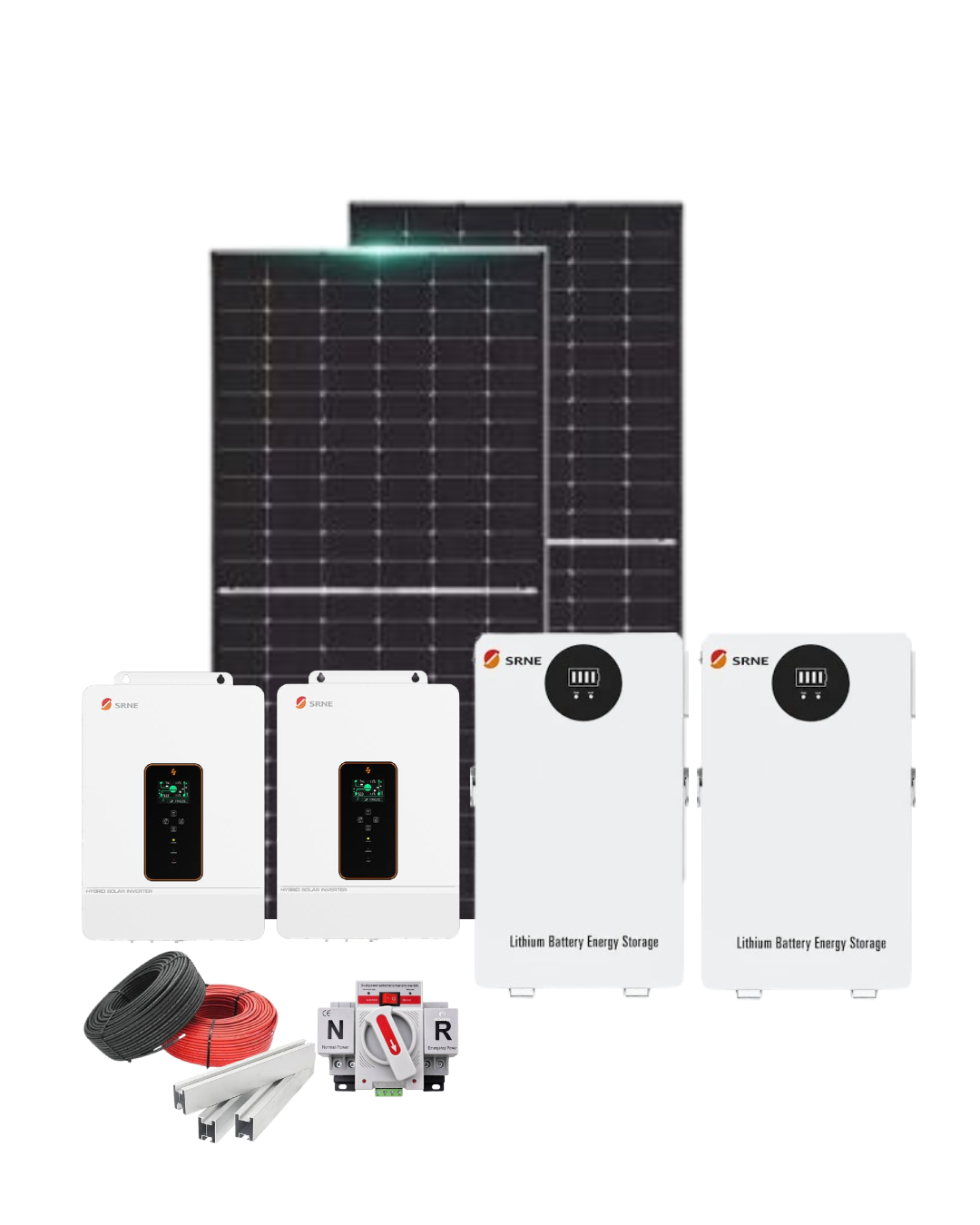
This 20 kWh SRNE Hybrid Solar System is a high-capacity residential and light-commercial solar solution designed to provide reliable daytime solar power, substantial battery energy storage and backup power during grid outages.
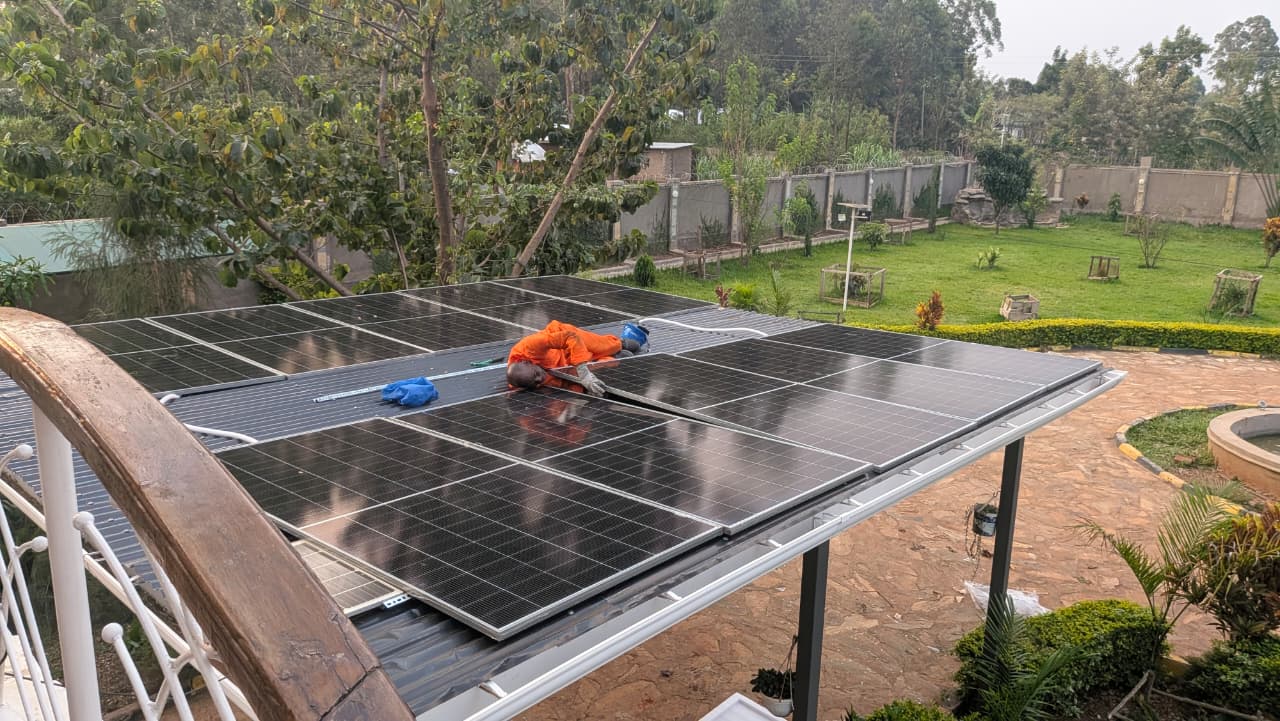
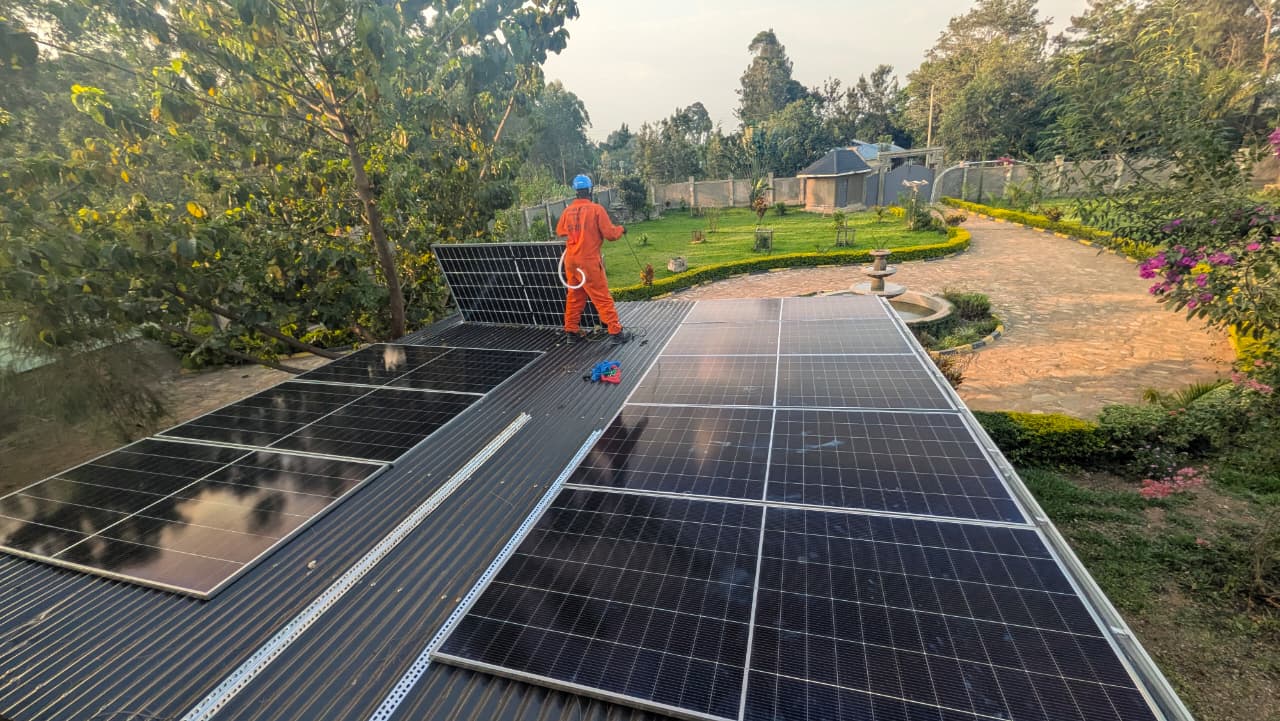
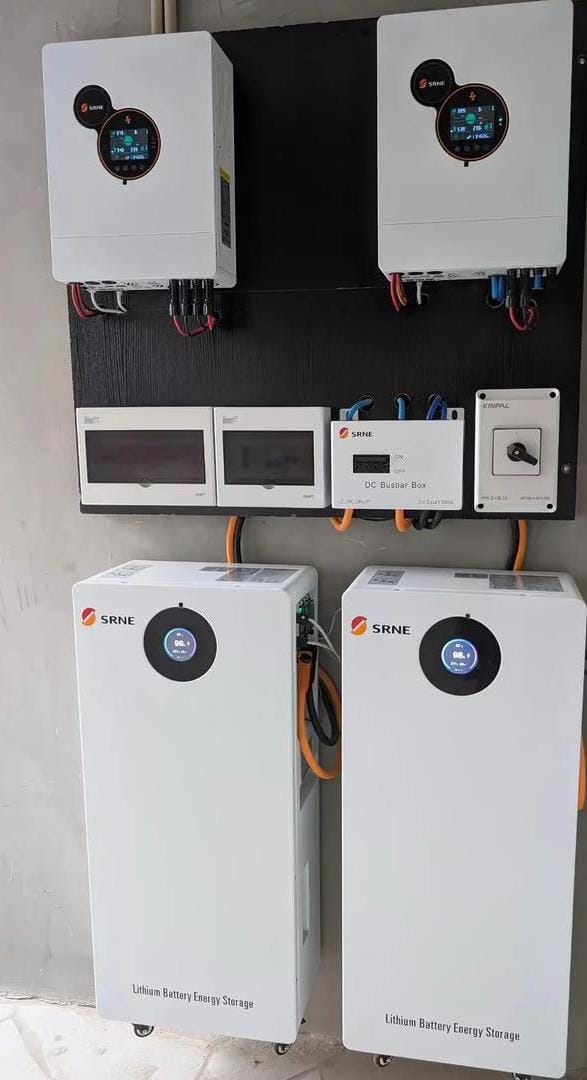
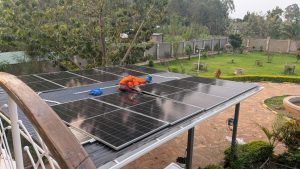
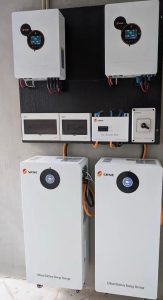
The system combines two 10 kWh SRNE hybrid inverters, two 10.24 kWh SRNE LiFePO₄ lithium batteries, and 18 high-efficiency 635 W Jinko bifacial TOPCon solar panels.
With approximately 11.43 kWp of installed solar PV capacity and 20.48 kWh of nominal battery storage, the system can significantly reduce dependence on the utility grid while providing dependable backup power.
1. SRNE Hybrid Inverters — 2 × 10 kW
The system uses 2 pieces of 10 kW SRNE Solar Hybrid Inverters, giving a combined inverter capacity of approximately 20 kW, subject to the manufacturer’s approved parallel configuration and installation requirements.
Key specifications from the quotation:
- Brand: SRNE
- Capacity: 10 kW each
- Quantity: 2 units
- Combined inverter capacity: 20 kW
- Type: High-frequency hybrid inverter
- Double MPPT
- Built-in BMS communication
- Wi-Fi compatibility
- Digital LED display
- Designed for solar, battery and grid integration
Advantages
High power capacity:
Two 10 kW units provide a substantially higher power-handling capability than a single 10 kW inverter, making the system suitable for larger household loads, offices, shops and other applications.
Hybrid operation:
The system can intelligently coordinate solar PV, battery storage and grid power, allowing solar energy to be prioritized while using the battery when required.
Dual MPPT technology:
The double MPPT configuration allows better management of PV strings and can help optimize solar production where panels have different orientations or operating conditions.
Battery management integration:
The built-in BMS compatibility allows the inverter to communicate with compatible lithium batteries for improved battery monitoring and protection.
Wi-Fi monitoring:
Wi-Fi compatibility provides convenient monitoring of system performance where supported and configured.
2. SRNE Lithium Battery — 2 × 10 kWh
The system uses 2 × 10 kWh SRNE lithium batteries.
According to the supplied quotation, each battery is specified as:
- Battery type: Lithium Iron Phosphate (LiFePO₄/LFP)
- Rated voltage: 51.2 V
- Rated capacity: 200 Ah
- Battery energy: 10.24 kWh
- Cycle life: 6,000 cycles
- Stated lifetime: 20 years
- Maximum parallel capacity: 16 batteries
Total battery storage
10.24 kWh × 2 = 20.48 kWh
Therefore, although the system is commercially described as a 20 kWh system, the actual nominal battery capacity based on the quotation specifications is approximately 20.48 kWh.
Advantages of the lithium battery bank
Large energy storage:
The approximately 20.48 kWh battery bank provides substantial stored energy for evening and night-time consumption.
Long cycle life:
The quoted battery has a rated cycle life of 6,000 cycles, supporting frequent daily charging and discharging.
LiFePO₄ chemistry:
LFP batteries are well suited to solar energy storage because of their durability and suitability for repeated cycling.
Expandable architecture:
The quotation indicates a maximum parallel capacity of up to 16 batteries, providing an expansion pathway where the compatible system configuration permits it.
3. Jinko 635 W Bifacial Solar Panels — 18 Pieces
The system has been adjusted from the original quotation’s 10 panels to 18 × 635 W Jinko bifacial monocrystalline solar PV modules.
The supplied quotation describes the panels as:
- 635 W
- Jinko
- Bifacial
- Monocrystalline
- N-type mono
- TOPCon bifacial technology
- Stated 24% transfer efficiency
- 25-year warranty
Total solar PV capacity
18 × 635 W = 11,430 W
Therefore:
Total PV capacity = 11.43 kWp
This is a strong PV array for a 20.48 kWh battery bank and is designed to generate substantial daytime energy for both direct loads and battery charging.
Advantages of bifacial panels
Bifacial energy generation:
The panels can capture sunlight from both the front and rear sides when installed in suitable conditions, potentially increasing energy yield from reflected light.
N-type TOPCon technology:
The N-type TOPCon construction provides a modern high-efficiency PV platform.
High individual panel output:
At 635 W per panel, only 18 modules are required to achieve 11.43 kWp of installed capacity.
Long warranty:
The quotation specifies a 25-year warranty for the panels.
4. Solar PV Array Configuration
The system will have:
| Component | Specification |
|---|---|
| Solar panels | 18 pcs |
| Panel rating | 635 W |
| Panel technology | Jinko Bifacial N-Type TOPCon |
| Total PV capacity | 11.43 kWp |
| Hybrid inverters | 2 × 10 kW |
| Total inverter capacity | 20 kW |
| Lithium batteries | 2 × 10.24 kWh |
| Total nominal battery capacity | 20.48 kWh |
The exact PV string configuration should be determined during installation according to the SRNE inverter’s MPPT voltage/current limits and the Jinko panel electrical characteristics. This is particularly important because the quotation itself does not provide the inverter’s detailed MPPT voltage/current specifications.
5. Balance-of-System Components
The original quotation also includes the main installation accessories, which can be incorporated into the revised system subject to final site assessment:
Solar PV cables
The quotation specifies 6 mm² solar PV cable, with separate red and black cables.
Battery cables
35 mm² battery cable.
Automatic Changeover Switch
63 A double-pole single-phase automatic changeover switch.
DC Protection
The quotation includes:
- DC double-pole breaker
- PV disconnect
- Surge protection device
- Combiner box
These provide isolation and protection for the solar PV side.
AC cabling
6.0 mm² AC twin-with-earth cable.
Mounting structure
Aluminum long mounting rails.
For 18 × 635 W panels, the mounting structure should be sized specifically for the 18-module array and the roof/ground installation location.
6. Expected System Operation
During sunny periods, the 11.43 kWp Jinko solar array supplies energy to the connected loads.
Any surplus solar energy can be directed toward charging the 20.48 kWh SRNE lithium battery bank, depending on the inverter configuration and load demand.
When solar production is insufficient, the battery can supply the loads. When the battery reaches its configured minimum state of charge, the system can utilize the grid as a backup source where grid connection is available.
During a grid outage, the hybrid inverter system can provide backup power to the designated loads, subject to the inverter’s actual output capability, battery state of charge and installation configuration.
7. Backup Capacity
The 20.48 kWh nominal battery bank does not mean that 20.48 kWh should always be consumed completely. Actual usable energy depends on the inverter’s battery settings, minimum state-of-charge reserve, battery operating limits, temperature and system losses.
For illustration:
| Average Load | Approx. theoretical runtime* |
|---|---|
| 1 kW | ~20.5 hours |
| 2 kW | ~10.2 hours |
| 3 kW | ~6.8 hours |
| 5 kW | ~4.1 hours |
| 8 kW | ~2.6 hours |
| 10 kW | ~2.0 hours |
*These are simple theoretical calculations using 20.48 kWh and do not account for inverter losses, battery reserve, cable losses or other system limitations. Actual backup time will therefore be lower.
8. Major Advantages of the 20 kWh System
1. High overall power capacity
The two 10 kW hybrid inverters provide a 20 kW combined inverter capacity, subject to the manufacturer’s approved parallel operation.
2. Large battery storage
The two SRNE batteries provide approximately 20.48 kWh nominal storage, making the system suitable for substantial evening and backup requirements.
3. Strong solar generation capacity
The 18 × 635 W panels provide 11.43 kWp of solar generation capacity.
4. Reduced electricity bills
A significant proportion of daytime energy can be supplied directly by solar, reducing reliance on utility electricity.
5. Backup during power outages
The stored battery energy provides backup power for selected loads during grid interruptions.
6. Modern N-type TOPCon PV technology
The Jinko bifacial panels provide high-output PV generation with the benefits of bifacial technology.
7. Long-life battery technology
The SRNE LFP batteries are specified at 6,000 cycles and a stated 20-year lifetime.
8. Expandability
The quoted battery specifications indicate support for up to 16 units in parallel, subject to compatible system architecture.
9. Smart monitoring
Wi-Fi compatibility and the digital LED display on the SRNE inverter provide convenient system monitoring.
10. Professional installation and warranty
Free installation countrywide, free delivery within Nairobi, and a 10-year warranty on complete solar systems.
Final System Specification
20 KWh SRNE Hybrid Solar System
- 2 × 10 kW SRNE High-Frequency Hybrid Inverters
- 2 × 10.24 kWh SRNE 51.2 V 200 Ah LiFePO₄ Lithium Batteries
- 18 × 635 W Jinko Bifacial N-Type TOPCon Monocrystalline Solar Panels
- Total solar PV capacity: 11.43 kWp
- Total nominal battery capacity: 20.48 kWh
- Total inverter capacity: 20 kW
- Double MPPT
- Built-in BMS compatibility
- Wi-Fi compatibility
- Digital LED display
- PV disconnect and DC protection
- Surge protection
- Automatic changeover
- Solar PV cabling
- Battery cabling
- AC cabling
- PV combiner/protection equipment
- Aluminum solar mounting rails
- Professional installation
In practical terms, this is best presented as a 20 kWh SRNE Hybrid Solar System with 20 kW inverter capacity and 11.43 kWp of Jinko bifacial solar PV.



Reviews
There are no reviews yet.